Press kit
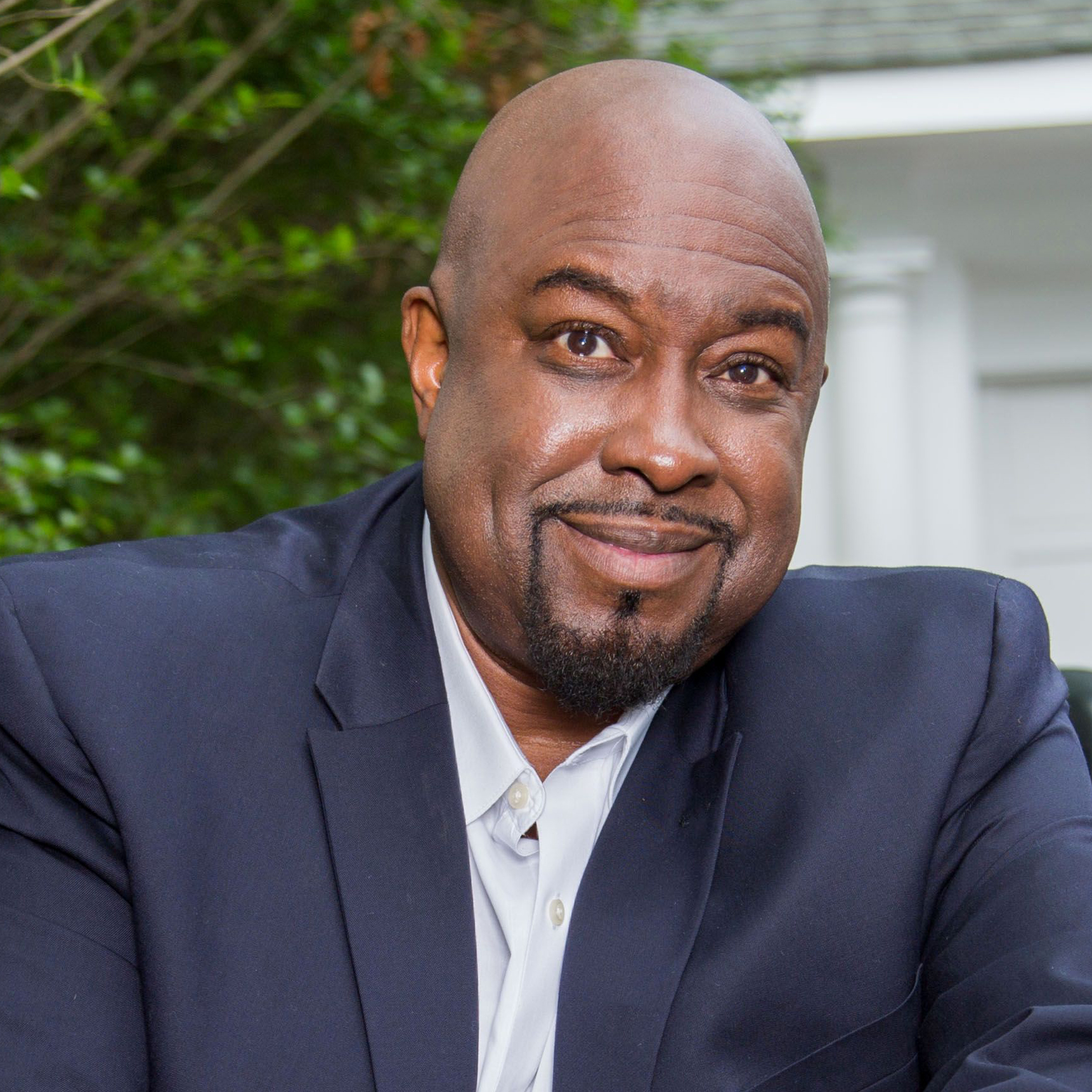
Derek H. Suite, MD
Sports Psychiatrist
Founder and Executive Chairman, Full Circle Enterprises
Updated August 2026
Biography
Ready to publish.
Derek H. Suite, MD is a board-certified psychiatrist and sports psychiatrist with 49 combined seasons across the NBA, NHL, NFL and MLS.
Derek H. Suite, MD is a board-certified psychiatrist and sports psychiatrist. He has spent twenty-five years working on site with professional teams across four leagues, and consults to organizations in entertainment, corporate leadership and first response. He is founder and executive chairman of Full Circle Enterprises and hosts The SuiteSpot.
Derek H. Suite, MD is a board-certified psychiatrist who has spent twenty-five years practicing inside professional sport, with 49 combined seasons across the NBA, NHL, NFL and MLS. He works where the pressure is rather than from an office, and because he is a physician he can move across the full range of a problem, from building a sleep routine to diagnosing and treating the disorder underneath it.
He trained as a journalist at Columbia before medical school, and has been publishing since 1994. He is founder and executive chairman of Full Circle Enterprises, whose four divisions span concierge mental performance consultation, community clinical care, a nonprofit, and a digital workforce wellness platform. He publishes peer-reviewed research in Sports Psychiatry, the journal of the International Society for Sports Psychiatry, and a continuing series on sleep in elite sport in Psychiatric Times. He hosts The SuiteSpot and is writing Sleep as Performance Medicine.
Three things to get right
- Psychiatrist, not psychologist. He holds an MD and is board certified by the American Board of Psychiatry and Neurology. “Sports psychologist” is wrong.
- The title is Founder and Executive Chairman of Full Circle Enterprises, the parent company. It carries across all four divisions. Do not substitute Director, Chief Strategist, or a division-specific variant.
- Columbia is past tense. He was assistant clinical professor of neuro-psychopharmacology at Columbia University Teachers College for ten years, through 2025. He does not currently teach there.
Professional identity
Derek H. Suite, MD
Sports Psychiatrist
Founder and Executive Chairman, Full Circle Enterprises
Sports psychiatrist to the New York Knicks, 2026 NBA champions, and consultant across professional football, hockey and soccer.
49 combined seasons across the NBA, NHL, NFL and MLS.
At a glance
- Credentials
- MD. Board certified, American Board of Psychiatry and Neurology. Columbia University Graduate School of Journalism, 1988, before medical school.
- League experience
- NBA, 18 seasons. NHL, 14 seasons. NFL, 10 seasons. MLS, 7 seasons.
- Sectors
- Sport, entertainment, corporate leadership, first responders, faith leadership.
- Also
- Ordained minister. Full Circle Confidential's leadership restoration work serves pastors and ministry leaders alongside its sports and corporate practice.
- Company
- Full Circle Enterprises, founder and executive chairman. Four divisions: Full Circle Confidential (concierge, 2005), Full Circle Health (clinical, 1999), Full Circle Life Enrichment Center (nonprofit), FCC Wellness (digital platform).
- Faculty history
- Assistant clinical professor of neuro-psychopharmacology, Columbia University Teachers College, ten years through 2025.
- Peer-reviewed
- Sports Psychiatry, the journal of the International Society for Sports Psychiatry: gratitude-driven resilience (2026), sleep optimization as a sports psychiatry intervention (2025, with David R. McDuff, MD).
- Book chapters
- Three, with Wiley-Blackwell, Springer and Routledge. Sole author on the Springer chapter, “Intimate Partner Violence in Male-Dominant Sports Culture” (2021, ed. Rahn Kennedy Bailey, MD), and on the Routledge chapter, “Combating Racial Battle Fatigue” (2024). Co-author with Whitney Maynor, PhD on “Working in Hospitals and Community Mental Health Centers” (Wiley-Blackwell, 2009).
- First byline
- “About Men: First Blood,” The New York Times Magazine, 30 January 1994, written as a third-year medical student. His published record spans thirty-two years.
- Earlier peer-reviewed
- Journal of the National Medical Association (2007, first author) and Journal of Health Care for the Poor and Underserved (2015, NIH-supported), on diagnosis, mistrust and treatment disparities, and Research on Social Work Practice (2007, first author) on Red Cross-funded trauma training for faith-based responders after 9/11.
- Trade press
- Psychiatric Times, a continuing series on sleep in elite sport, including a CME article. Black Westchester Magazine, 23 columns since 2025.
- Selected press
- Black Enterprise (2004) profile on founding the practice; The New York Times (2009) on antipsychotic prescribing to children on Medicaid, quoted throughout and photographed for the print edition; Forbes (2024) on managing time zone travel in the NBA; Psychiatric Times (2025) profile; America Magazine (2017) on clergy burnout.
- Broadcast
- Television interviews on athlete and public-figure mental health dating to 2013 (Arise Entertainment 360), plus podcast appearances including the Peak Sports Psychiatry Podcast (2026).
- Selected speaking
- New York Commission of Religious Leaders summit, Sheen Center, on clergy burnout and self-care, alongside Cardinal Timothy Dolan, Rabbi Joseph Potasnik and Chirlane McCray. Covered by America Magazine.
- Podcast
- The SuiteSpot, weekly, on Apple, Spotify, YouTube, Amazon Music and iHeartRadio.
- App
- Suite Spot, App Store, audio mental training.
- Book
- Sleep as Performance Medicine: What happens to high performers before they break down. In progress. Foreword by David R. McDuff, MD.
- Based
- New York.
Speaking topics
Why performance collapses quietly before it collapses visibly, what sleep loss does to decision-making and emotional control, and what an organization can actually change. Draws on protocols built for teams travelling across time zones on compressed schedules.
Elite coaches and executives routinely run on severe sleep debt, then make the decisions everyone else lives with. What the research shows about judgment, temper and risk tolerance when recovery fails, and how leaders can protect the hours that matter.
The performer trust barrier: why elite performers filter everyone who approaches them, and what it takes to be the one person in the room without an agenda. Useful for anyone who has to build rapport quickly with a guarded audience.
What changes when care is delivered in the building rather than referred out, how a clinician works alongside existing performance and medical staff, and where the confidentiality lines have to hold.
The overlap between contemplative practice, spiritual tradition and the neuroscience of focus, and why the framing matters as much as the technique for audiences who have been told meditation is not for them.
Formats
Keynote, half-day workshop, panel, fireside, staff training, and podcast or broadcast interview.
Fee, travel and lead time available upon request.
Suggested interview questions
- 01What does a sports psychiatrist do that a mental performance coach cannot?
- 02You have said you go where the pressure is instead of waiting in an office. What does that look like on a game day?
- 03What is the performer trust barrier, and why do you compare it to the blood-brain barrier?
- 04You argue sleep is a clinical instrument rather than a reward. What convinced you?
- 05What are the signs an organization misses before a high performer breaks down?
- 06Coaches sleep worse than the athletes. What happens to a team when the person making decisions is depleted?
- 07How do you hold confidentiality in an environment where everyone from the coach to the owner wants an update?
- 08What does this work look like outside sport, with executives or first responders?
- 09You write for both a peer-reviewed journal and a community newspaper. Why both?
- 10You went to journalism school before medical school. What does a reporter's training give a psychiatrist that a psychiatrist's training does not?
- 11You published an essay in the New York Times Magazine in 1994, as a medical student, about being terrified to draw blood. What does that student have to say to the physician you became?
- 12In 2009 you told the New York Times you were seeing children on Medicaid who had been put on antipsychotics they did not need. What has changed since?
- 13Your 2007 paper on misdiagnosis and mistrust is still being cited today. What has changed since you wrote it, and what has not?
- 14You wrote the chapter on intimate partner violence in male-dominant sports culture. What does a league get wrong when one of these cases becomes public?
- 15What is the most common thing high performers get wrong about recovery?
Media assets
Headshots
Podcast cover art
Logo files
Archive
Video
One-page PDF
Selected press & media
- 2004Black EnterpriseProfile on founding the practice.
- 2009The New York TimesCoverage on antipsychotic prescribing to children on Medicaid, quoted throughout and photographed for the print edition.
- 2017America MagazineCoverage on clergy burnout.
- 2024ForbesManaging time zone travel in the NBA.
- 2025Psychiatric TimesProfile.
- 2026Peak Sports Psychiatry PodcastPodcast appearance.
The podcast

The SuiteSpot
A weekly show about what holds people up under pressure, drawing on science, practical wisdom and scripture. Episodes run seven to ten minutes. Made for athletes, coaches, executives, students, frontline personnel, and anyone working through an injury, a setback or a hard season.
Also on Amazon Music, iHeartRadio, Pocket Casts, Overcast, Castbox, Deezer and Podcast Addict. RSS feed.
Current series: Raise Your Floor, The Science of Standards
- 01 / 7Making Moves
- 02 / 7Take Action
- 03 / 7Win It All
- 04 / 7Trust Yourself
- 05 / 7Finish Strong
- 06 / 7Self Care
- 07 / 7Slow Down
Session art
01 / 05Session artwork 1 of 5




The book, in progress
Sleep as Performance Medicine
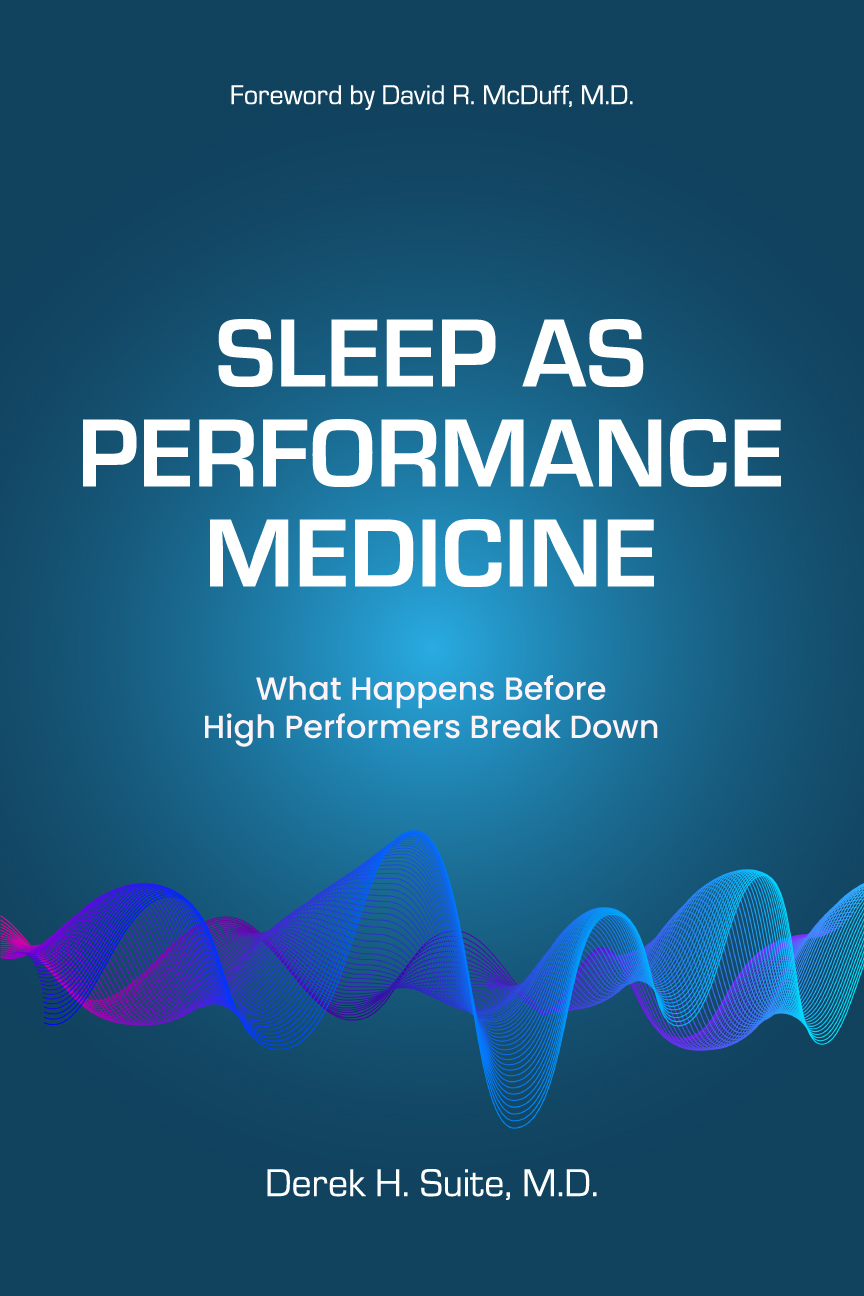
What happens to high performers before they break down.
Sleep is not the reward you get after the work. It is the clinical instrument that decides how much work a person can survive, how they think, how they recover, how they hold their temper, and how long their nervous system lasts. This book is the case for treating it that way, from twenty-five years inside locker rooms, front offices and exam rooms.
Foreword by David R. McDuff, MD. Written by a physician who trained as a journalist first, at Columbia, before medical school.
First chapter when it is ready, and occasional notes from the writing.
Media & speaking